Tuesday, 4 of Julio of 2006
Good Practices in Movable Web
Yesterday, speaking of Firefox, the subject of the advantages that it has, in design was touched tangentially Web, to follow the standards decided in the W3C. This interesting subject, has been entering completely the thematic one of this blog, with the publication for barely days of the Good Practices in Movable Web on the part of the W3C (thanks Gonzalo for the warning). But what is the movable Web?
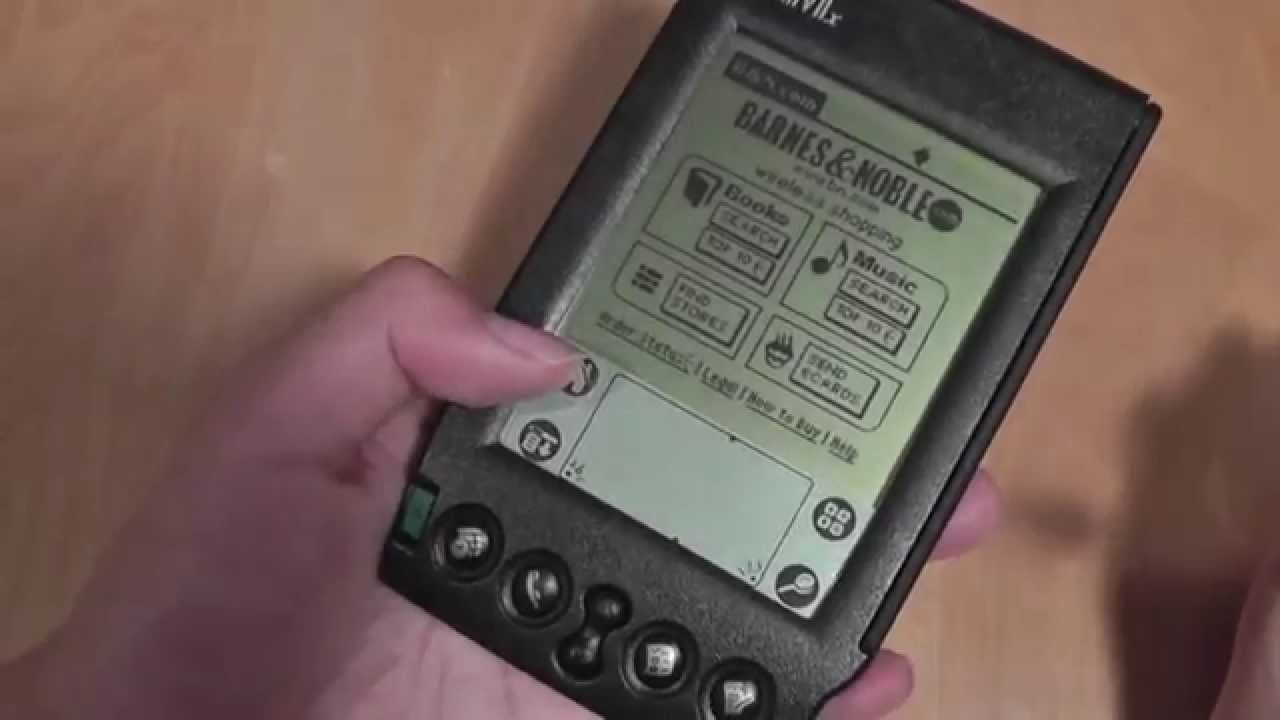
When speech of Movable Web is making reference to a Web in which the user can accede to the information from any place, independent of the type of device that uses for it.
At the moment, an increasing demand on the part of the users with respect to an unconditional availability of the Web exists, but the reality in the market is another one since although the supply of movable devices is growing of amazing form in the last years, offering to us infinity of devices from which to carry out operations that normally we realised from the tablecloth equipment, limitations at the time of acceding to the services exist from those movable devices. In the majority of it occasions, the result is a little satisfactory experience of user when finding us with numerous problems to accede to the Web from the movable devices.
The W3C, with the aim of turning the access to the Web from a movable device into something so simple and comfortable as is it from the tablecloth equipment, has started up the Initiative of Movable Web that it looks for to solve the interoperability problems and usabilidad that at the moment make difficult the access to the Web from movable devices and to make one possible of the primary targets of the W3C that consists of reaching a unique Web. One would be to transform the Web into an omnipresent platform of services completely I am transparent for the user.
Now that we know of what we are speaking, we see what contributes these Good Practices in Movable Web of the W3C:
The W3C is pleased in announcing the passage to Candidate to Recommendation of Good Practices in Movable Web 1.0. Elaborated for designers of Web sites and managers of content, these you rule describe how to create content Web that works correctly in movable devices. Thirty organizations participate in the Initiative of Movable Web, with the aim of arriving at a consensus and promoting the implementation of these you rule to improve the experience of the user and to secure “a single Web”.
As blog explains Gonzalo in his well, candidate to recommendation means that the next step, once has been received sufficient information on the implementation of these practices, will be the one of Recommendation (that is to say, officially approved by the W3C). We can learn more on this initiative of standardization of the movable Web in the official page, as well as read the note of official press and the opinions of the personages whom weight in this new world of the movable Web has major. Also, to be abreast of the last advances, we can follow blog of the work group in charge of this area. Paralelamente, another group is working in describing the characteristics of all the movable devices, to thus be able to define rules that facilitate the design for these apparatuses.

The movable Web is already an important part of the Web
Volunteers brought back to consciousness with the importance of this document, are writing up a summary in Castilian, to add it to other documents already translated. Altogether they are 60 you rule, that advises to us how to make pages Web apt for small connected devices to Internet, like for example movable telephones and PDA. This guide of good practices will be as important as acualmente the others established by the W3C are it in the design Web generally. In fact, like already validation tools exist to verify our documents CSS, HTML, etc, will not take in appearing a validador of movable contents.
The use of standards is something fundamental facing a transparent interoperability between different technologies. At the outset the navigators for PC only existed, which conditioned the design Web to concrete sizes of screen, and concrete programs. How many pages of years 90 shone an ingenuous one “optimized for 4 Internet Explorer and one resolution of 800×600 ″. Thanks to such “optimization” now they are difficult to read using for example Firefox to 1280×1024. It is more, nowadays a page Web can be also seen using a PDA, a software of reading that transforms the text into voice, or a BrailleBook, that shows in relief, using braille, the text of the page, thus allowing to sail to the invidentes people. We cannot try that our page is seen well in all these devices, and which are invented later, of another standard way that is not using Web.
Patented by a Spanish, free software uses and it is connected by bluetooth
In order to know more about the standards Web, in the W3C guides brief in Spanish can be found:
- Accessibility: at first the objective era to cause that the contents of Internet were accessible for people with incapacities. But later it was verified that the designs that worry about the accessibility for these groups, also are easier to use by the rest of the society.
- CSS: the objective of the design present Web is the complete separation of presentation and content. A thing is what you mean, and another how you want that it is seen (colors, sources, positions). If both well are differentiated, it will be easy to you to make different presentations for clients (agents) different. An example is the movable version of this same page, that from the same content, easily generates a presentation designed for movable devices.
- Independence of Device: with the separation commented before, we were able to easily make presentations specifically designed for apparatuses that nor perhaps existed when to create the content.
- Internationalization: the internationalization could be defined as a process through what they are going away to design adaptable Web sites to different languages and regions without needing realising changes in the code. The use of formats and protocols that do not establish barriers to the different languages, local systems of writing, codes and other conventions, is essential to speak of internationalization in a Web site. The Internationalization also is well-known like I18N, that is the abbreviation of Internationalization because there are 18 letters between the i and the n.
- Multimodal interaction: The Multimodal Interaction or Multimodality consists of a process of which diverse devices and people are able to carry out an interaction (auditory, visual, tactile and sign) combines from any site, at any time, using any device and of accessible form, increasing therefore the interaction between people, and devices and people. The user through the multimodal interaction will be able to determine the way or ways of interaction that wants to use to accede to the information, which extends and improves the interface of the user since it becomes the joint use of the voice and other types of devices of introduction of data like keyboards possible, mice, pencils, etc., especially for movable applications.
- Policy of Patents of the W3C: the form to manage the patents in the creation process and development of standards Web with the aim of making the diffusion, adoption and continuous development of standards possible Web without the problems that can appear in relation to author rights. That is to say, the primary target of this policy is to assure that the recommendations of the W3C, developed under this policy, will be implemented free of author rights.
- Privacidad and P3P: sometimes, a species of distrust exists towards Internet that influences negatively in the development of the commerce based on the Web. In order to solve this problem P3P, Platform of Preferences of Privacy arises (for Platform Privacy Preferences), that is born before the necessity to guarantee the privacy in a more and more extensive Web. P3P is a standard language that offers to the users a form simple and automated to more control the use that becomes of its personal information in the Web sites that visit.
- Security: the necessity to guarantee integrity, the confidentiality and the authenticity of the data that flow through the Web has turned into an essential requirement. For this reason the security area grows quickly, but there are many difficulties at the time of handling data with hierarchic structures and sub-groups of data with different requirements concerning confidentiality, rights of access or integrity. In order to do against these problems preparations have been developed standard like XML Encryption and XML Signature, to handle situations in which parts of a same document need a different treatment, as they happen in documents with different sections whose content can be seen by users but not by others.
- Services Web: it would be possible to be spoken of them like a set of applications or technologies with capacity to have an operation in the Web. These applications or technologies interchange data with the aim of offering services to each other. The suppliers offer their services as remote procedures and the users ask for a service calling to these procedures through the Web.
- Multimedia technology: the devices to sail in the Web have evolved years of exponential form in the last. Next to this evolution, it has been back the simple text introduction and images, being replaced by the possibility of incorporating a great variety of objects, as they can be archives of sound, video and animation, with the aim of enriching the experience of the user and at the same time offering the possibility of using different means jointly. But the introduction of all these elements of compatible form becomes a complicated work for developer. For this reason, the specifications developed by the W3C work in the creation of languages in which this enriched multimedia is compatible with the diverse devices and existing navigators in the market.
- Technologies XML: XML is a Language of Tensile Labelling very simple, but strict that a fundamental paper in the interchange of a great variety of data plays. It is a language very similar to HTML but its main function is to describe data and not to show them as it is the case of HTML. XML is a format that allows the reading of data through different applications.
- Movable Web: the subject that we are trying today. In this brief guide we will be able to understand better east phenomenon and its particularitities.
- Semantic Web: the Web has deeply changed the form in which we communicated, makes businesses and carried out our work. The communication the world at any time and to low cost is practically possible yet nowadays. Nevertheless, at the same time, these factors that have caused the success of the Web, also have originated their main problems: overload of information and heterogeneity of sources of intelligence with the consequent problem of interoperability. The Semantic Web aid to solve these two important problems allowing to the users to delegate tasks in software. Thanks to the semantics in the Web, software is able to process its content, to reason with this, to combine it and to realise deductions logics to solve daily problems automatically.
- XForms: it is a new language of labelling for forms Web, designed to be the substitute of the traditional forms HTML, and that is going to allow to the developers of forms Web to distinguish between the intention of the form and its presentation. This clear separation between content and presentation offers great advantages in terms of reusability, independence of device and accessibility.
- XHTML: XHTML (Marked Language of of Tensile Hypertext) is one more a stricter and clean version of HTML, that is born indeed with the aim of replacing more and more to HTML before its limitation of use with the abundant tools based on XML. XHTML extends HTML 4,0 combining the syntax of HTML, designed to show data, with the one of XML, designed to describe the data. Before the arrival to the market of a great number of devices, XHTML arises like the language whose labelling, stricter than HTML, is going to allow a correct interpretation of the information independent of the device from which it is acceded to her. XHTML can include other languages like MathML, SMIL or SVG, on the contrary that HTML.
The subject of the standards Web has gained the importance that deserves years in the last, and now with the boom of the movable communications, it begins to take form for these small apparatuses. Something without a doubt that one that is wanted to consider good designer Web, must have from now on in mind.
By: New features
RSS commentaries | Trackback |
To print this post
Related articles
Suscríbete to be to the current of the new features in this blog


The fact is that the WWW has changed (llámese also evolved), to give more benefits to our form to sail. Because we want to sail and to visit the Web from any place and with our PDA's…
Today he is not strange to almost find in any site, contents Flash, objects multimedia (videos, etc…), that not always can be compatible with our navigator.
Evidently, any portable desktop computer/, is with the OS that is, usually takes a navigator who includes almost all the options to be able to read/to reproduce/to interpret contents correctly Web of last generation. Sometimes it is called on to update some modules, but generally everything is reproducible.
On the contrary, to sail using PDA's and/or devices “that leave the minimum formats of screen” (640×480), he can become a suplicio if the designer of site has not considered to what type of final device site is destined and also, by all means, if our hardware is not preparation to this end.
Lately I come finding enough sites that plead for a “return to simplicity”, that is to say, to use the typical commandos HTML which All the navigators understand, by simple that they are. This, that initially can seem a triviality or a “one step back”, accelerates navigation since there is to load less objects “extra” and aparatejo takes control more compatible of the WWW in any - a movable telephone with benefits llámese Web.
Personally ground to use in Palm OS, the well-known Plucker (http://www.plkr.org/) to lower certain contents to me to read offline. He is very simple, donateware and it works rather well since one adapts correctly to the screen of Palm.
In my PocketPC deceased (it passed away days ago, you can read his here epitafio: http://www.pcdemano.com/phpBB2/viewtopic.php?t=15095), used the well-known Avantgo. Never the use of these tiny screens is comfortable similarity to me to sail. Software of Netfront that usually is of the best ones does not even show to all the contents Web the 100%.
In my SonyEriccson k700i I proved the movable version not long ago of Operates, and he is not nothing bad, but as always, or the pages “are prepared for mobile” or agarrense to be able to sail with soltura.
It is to hope that in the future, when the developers of software, the W3C and the manufacturers of devices unite in standard's compatible 100% however, we can really arrange of a movable WWW and with quality, with ls same options that have “the tablecloth” navigators.
I of while, finish acquiring a PSP in “substitution” of my Paca deceased, and VERY am surprised with the navigator whom she includes. Nonload all type of contents, but works in almost all type of Webs (including which I can read comfortably from my sofa). As browser it is very “new” need muuuchas options, but I hope that with time, the distance with its brothers majors will decrease safe. and eye, shortly Nintendo will publish a navigator for its system DS (developed by It operates).
So manteneros it alerts that the WWW continues moving.
Greetings, Hark0
(Pardon to coil to me as much).
Hello Hark0, first my more felt condolence by your paquita
The future of Internet it is in the movable devices. Just like computer science was restricted to mainframes, and now it has portable, PDAs and until computers clock, fixed Internet moves of the PCs to all type of devices. It is more, fodder than the PCs fixed can get to disappear absolutely.
The technology will advance, but the problem that I see him is the size of the screens. A PDA screen clears the minimum that normal people would be prepared to use, and the one of a moving body only she is worth for fast consultations and operations that do not take more of a minute.
But in return, the possibility anywhere of having connection to Internet, or with wifi, wimax, or what comes, is impressive. It is going to be the following revolution, and is going to change our way to live (it watches now what you think of a road map about paper, compared with a GPS, and extrapólalo to everything what you use day to day).
The movable devices are the future, a day a company would remove an apparatus that is U.S.able by the masses (for example a well designed UMPC but), and from then we will not be able to think that before it was necessary to go to house and to sit down in a chair of the office to accede to Internet and to watch any thing.
100% in agreement with you Marks…
Your, I…. ALL we want to take Internet in the pocket….and of comfortable form, that can be read…. sure…. unless it leaves to the market a UMPC proper….
While, we will continue using “what there is”.
H.